Your spare is the one tire you never look at, until you desperately need it. Many drivers discover on the roadside that the spare is flat, aged, or not what they expected. A five-minute check can save you from that.
Know what you have
- Compact temporary spare ("donut"). A smaller, lighter wheel and tire designed only for short, limited use. Most common in cars with a spare.
- Full-size spare. Looks like your regular tires. Often found on trucks and SUVs. It may or may not match your other tires and wheels, so read your manual.
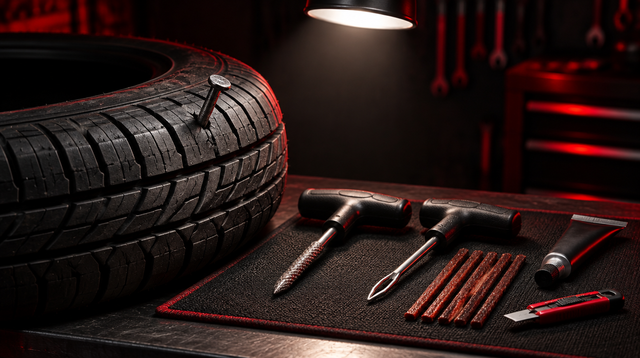
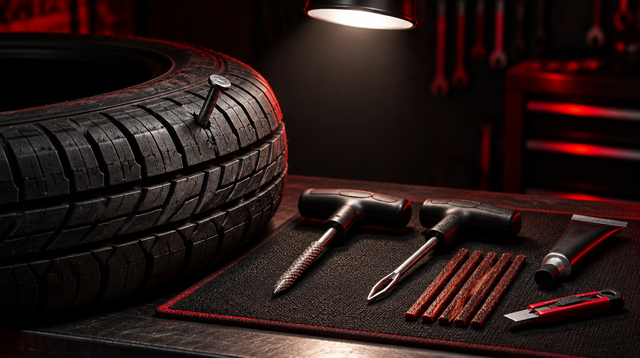
- Sealant and inflator kit. Can seal small tread punctures but not sidewall damage or large holes. It is a temporary fix.
- No spare, with run-flat tires. Some vehicles rely on run-flats, with a limited range after air loss.
Limits of a temporary spare
AAA says manufacturers typically advise keeping to under about 50 mph and no more than about 50 miles on a temporary spare. Your owner's manual and the label on the spare give the exact limits for your vehicle. These tires are for getting to a shop, not for daily driving. NHTSA also recommends not using a full-size spare in place of worn tires, except in emergencies such as replacing a flat.
Check the pressure
NHTSA advises checking the pressure of all tires, including the spare, about once a month. Temporary spares often need considerably higher pressure than regular tires. Do not guess. Read the pressure on the spare's sidewall or in your manual, and check with a gauge when the tire is cold.
Check the age and condition
Spares age even when unused. AAA notes that spares typically last about 7 to 10 years with good care, and that rubber can break down and leak even in a trunk. Look for cracks, dry rot and a worn valve stem. You can read the tire's age from the four-digit date code on the sidewall: the first two digits are the week and the last two are the year. If your spare is old or cracked, have it checked and replaced if needed. If it is mounted underneath the vehicle, dirt and moisture can make it age faster.
Check the tools
- Jack is present and works.
- Lug wrench fits your lug nuts.
- Locking wheel nut key is in the car, if your wheels use locking nuts.
- Owner's manual is in the glovebox.
Quick checklist: do this today
- Find your spare and identify its type.
- Check its pressure with a gauge.
- Inspect the sidewall and date code.
- Confirm the jack and wrench are there.
- Note the speed and distance limits in the manual.
South Florida note
Heat and humidity are hard on rubber, so check the spare more often than you might in a cooler climate. And since hurricane season can mean sudden evacuations, a ready spare is part of being prepared.
What if you do not have a spare?
Many newer vehicles skip the spare entirely and ship with a sealant kit or run-flat tires. If that is you, it helps to have a plan before you need one. Know whether your sealant kit has expired, keep a basic inflator in the car, and save a roadside assistance or mobile tire service number in your phone. Remember that sealant kits cannot fix sidewall damage or large holes.
Replacing and storing a spare
If you replace a worn spare, get the same type for your vehicle, because the spare is tied to the way the car is designed. Run-flat vehicles should stay with run-flats, since they are considered a safety feature. If you have a full-size spare, think about including it in your tire rotation only if your manual says that is acceptable. Not every vehicle allows it.
After you use the spare
Once you have driven on a temporary spare, get the flat tire inspected right away. If it is repairable, a shop can fix it; if not, it needs replacing. Then put the spare, jack and tools back where they belong, and check the spare's pressure again.
Need a hand?
We can check your spare and tire pressures for you. We can help at our shop in Sunrise, or come to you with mobile tire service across Broward, Miami-Dade and Palm Beach. Call (954) 773-1896 or book online.
Frequently asked questions
How often should I check my spare tire?
About once a month along with your other tires, per NHTSA guidance. Also check it before long trips and after the vehicle has been serviced.
How long does a spare tire last?
AAA says spares typically last about 7 to 10 years with proper maintenance, but heat, moisture and exposure can shorten that. Check for cracks and the date code.
Can I use a donut spare for a long trip?
No. A temporary spare is for short-term use at reduced speed, usually around 50 mph or less. Get the regular tire repaired or replaced as soon as possible.